Photo: ShortwebArticles.com | Content For The Curious editorial
Tires, fluids, emergency kit, route planning — a practical checklist to review before hitting the road on any long-distance drive.
Key Takeaways
Tire pressure and tread depth are the single most important vehicle checks before any long drive.
Fluids — oil, coolant, brake fluid, and washer fluid — should all be verified at least a day before departure.
A basic emergency kit can be assembled in minutes and may be critical in a breakdown situation.
Knowing your route, planned stops, and alternate paths reduces stress and improves safety.
Driver fatigue is a leading cause of highway accidents; plan rest breaks into your schedule.
Why a Pre-Trip Checklist Actually Matters
Most long-distance breakdowns aren't random. They trace back to something that was already wrong before the car left the driveway — a tire that had been slowly losing pressure, an oil level that crept below the safe mark, or wiper blades that were fine for the neighborhood but useless in a highway downpour. A methodical check before departure isn't about pessimism; it's about giving yourself the best chance of an uneventful drive.
This checklist is organized by category so you can work through it efficiently. The Car Maintenance hub covers the broader upkeep context behind many of these items, and our guide on what to keep in your car on every road trip complements the emergency kit section below.
Tires
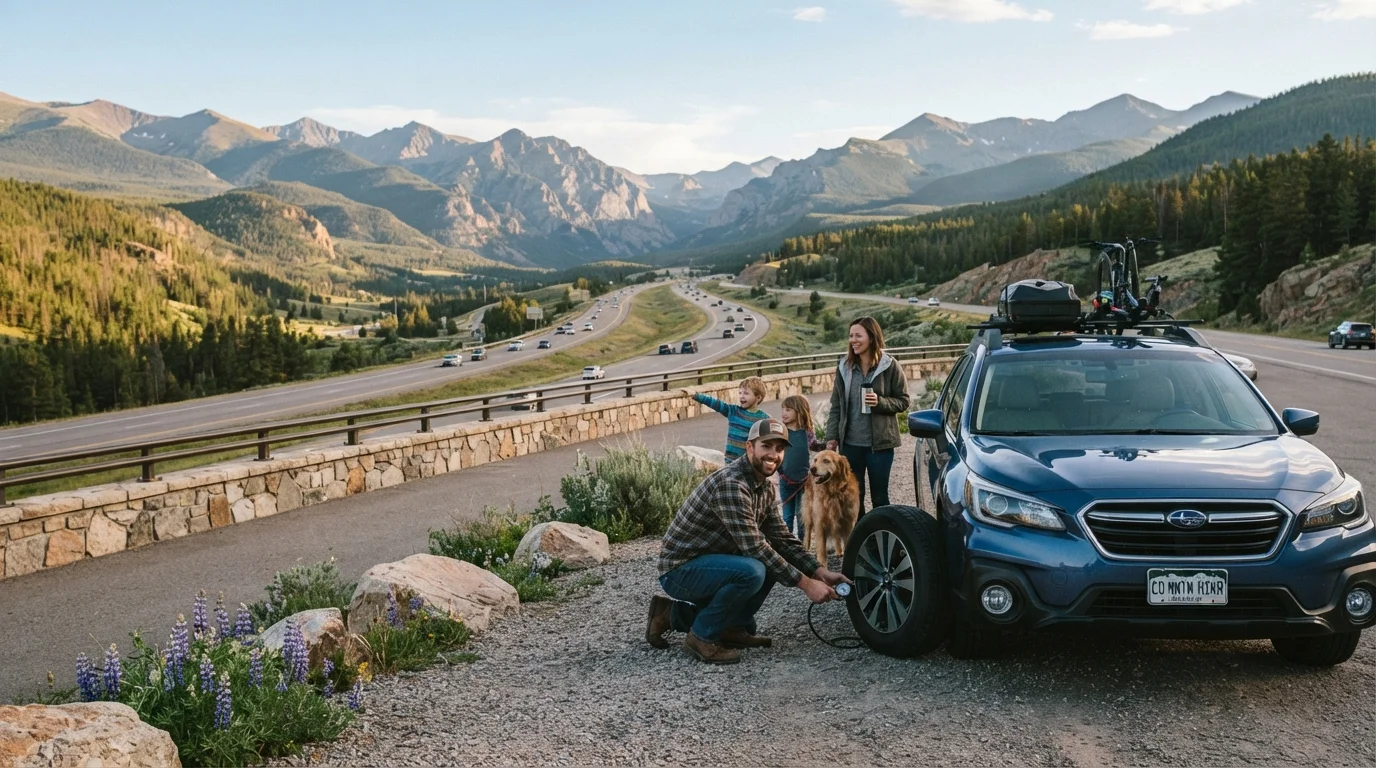
Check tire pressure on all four tires (and the spare) using a gauge, inflating to the level specified on the driver's door jamb sticker — not the number printed on the tire sidewall.Must
Inspect tread depth by inserting a quarter into the tread groove; if you can see all of Washington's head, the tire is worn and should be replaced before a long trip.Must
Look for visible sidewall bulges, cracks, or embedded objects like nails or screws that could cause a blowout at highway speeds.Must
Confirm the spare tire is present, properly inflated, and that the jack and lug wrench are stowed and accessible.Should
Fluids
Check engine oil level with the dipstick when the engine is cold; top off or schedule an oil change if you're within 1,000 miles of the recommended interval.Must
Verify coolant level in the overflow reservoir and inspect hoses for cracks or soft spots that could lead to overheating on a long highway stretch.Must
Check brake fluid level in the reservoir under the hood; a low level can indicate worn brake pads or a leak, both of which require professional attention before departure.Must
Top off windshield washer fluid — it runs out faster than drivers expect during highway driving through insects and road spray.Should
Check power steering fluid and transmission fluid levels if your vehicle type requires it; consult your owner's manual for guidance.Nice to have
Lights and Visibility
Test all exterior lights — headlights (low and high beam), tail lights, brake lights, turn signals, and hazard flashers — replacing any burnt bulbs before you leave.Must
Inspect wiper blades for streaking or skipping; replace them if they leave smears, as highway rain can reduce visibility to near zero within seconds.Must
Clean all exterior glass inside and out, and adjust mirrors before loading the vehicle to account for added cargo weight that may change the rear angle.Should
Brakes and Mechanicals
Listen for any unusual noises — squealing, grinding, or pulling to one side — when braking during a slow-speed test run; have a qualified mechanic inspect if anything seems off.Must
Check for any warning lights on the dashboard, particularly the check engine, tire pressure, and battery indicators; investigate before the trip rather than hoping they resolve on the road.Must
Verify belts and hoses visually for obvious wear, cracking, or fraying if you're comfortable doing so; if unsure, add this to a pre-trip shop visit.Nice to have
Emergency Kit
Pack a basic roadside emergency kit including jumper cables or a jump starter pack, a reflective warning triangle or flares, a flashlight with fresh batteries, and basic first aid supplies.Must
Carry a phone charger and a portable battery bank in case you need to call for help in an area with no outlet access.Must
Include a paper map or downloaded offline map for the route in case cellular coverage drops in rural or mountainous areas.Should
Keep a small amount of cash on hand; some tolls, rural gas stations, and emergency services don't accept cards reliably.Should
Route and Driver Readiness
Plan your route in advance including rest stops every 2 hours — fatigue is a documented contributor to highway accidents, and scheduled breaks help prevent it.Must
Check weather forecasts along the route, not just the destination, and identify any construction zones or road closures that could affect travel time.Should
Ensure at least one other person in the vehicle knows the general route and has roadside assistance contact information if the primary driver is incapacitated.Nice to have
Tools You'll Need to Run Through This Checklist
Most of what's listed here requires nothing more than your eyes and a few basic tools you likely already own. A few items — particularly brake inspection and suspension checks — benefit from a professional set of eyes if you're not confident doing them yourself.
Required
Tire Pressure Gauge
Measures PSI in each tire accurately — more reliable than relying on gas station air pump displays.
Required
Coin (quarter or penny)
Used to perform a quick tread depth check on all four tires before departure.
Required
Flashlight or Headlamp
Helps you inspect under-hood components, check fluid levels in low light, and verify brake light function.
Required
Owner's Manual
Your definitive reference for fluid specifications, tire pressure recommendations, and warning light meanings specific to your vehicle.
Optional
Portable Jump Starter Pack
Allows you to restart a dead battery without needing another vehicle — especially useful in remote areas.
Optional
OBD-II Diagnostic Reader
Reads check engine light codes so you understand what a dashboard warning means before visiting a mechanic.
It can be tempting to dismiss a persistent warning light or a subtle brake noise as 'something to deal with later.' On a long highway drive, minor issues can escalate quickly — brake fade, overheating, or a blowout are far more dangerous at 70 mph than in a parking lot. If you're unsure about any mechanical item on this checklist, have a qualified mechanic inspect the vehicle before you leave, not during a roadside emergency.
Final Checks and Departure Day
The night before you leave, confirm your route has been saved offline in your navigation app and that your phone is fully charged. Verify that all passengers have what they need for the first leg — snacks, medications, and entertainment for long stretches. On departure morning, do a final walk-around of the vehicle to confirm nothing looks off: no visible fluid puddles under the car, all doors and the trunk fully closed, and mirrors adjusted before you pull out.
Driver Fatigue Is a Real Safety Risk
The National Highway Traffic Safety Administration consistently identifies drowsy driving as a factor in thousands of crashes annually. No amount of caffeine reliably substitutes for sleep. If you're planning a very early departure or a drive of more than 6–8 hours, ensure you're well-rested the night before and have a plan for splitting driving duties or taking a mid-trip rest. Pulling over at a rest stop is always the right call if you feel yourself losing alertness.
For the broader logistics of planning the trip itself — reservations, documents, and destination prep — see our pre-trip planning checklist. And if you want a concise same-day reference, Before You Pull Out of the Driveway covers the immediate departure essentials.
Cars Editorial Team is the collective byline for our editorial team and contributor network. Articles published under this byline or an editorial pen name are researched, written, and reviewed according to our editorial standards for clarity, consistency, and independence before publication.
The content on this site is for informational purposes only and is not a substitute for professional advice. Always consult a qualified professional for guidance specific to your situation.