
What to Keep in Your Car on Every Road Trip

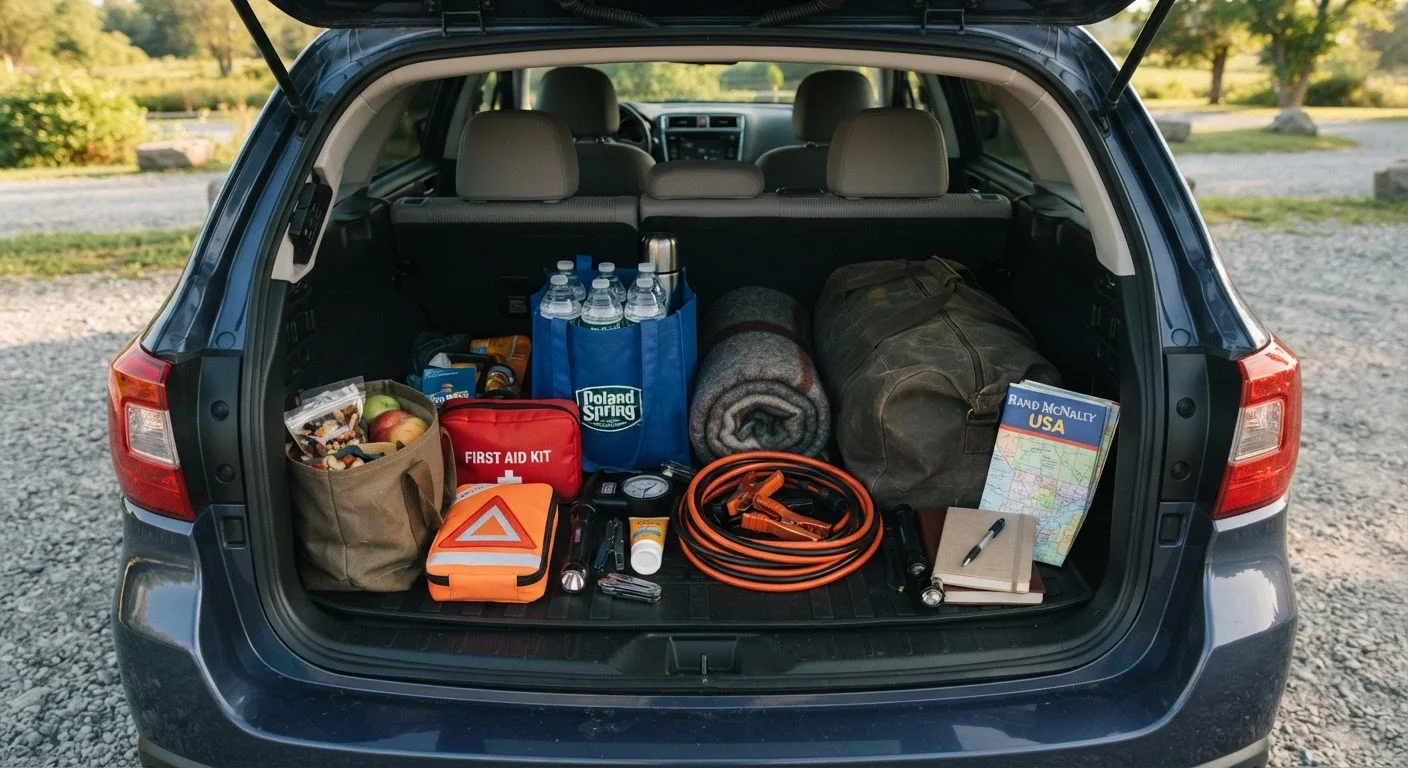
Photo: ShortwebArticles.com | Content For The Curious editorial
Documents You Must Have on Hand
Before a single mile rolls by, make sure these papers are in your glove box or a dedicated folder. A missing document can turn a minor traffic stop into a major headache.
- Driver's license — current and valid for the states you'll pass through.
- Vehicle registration — matches the car you're driving.
- Proof of insurance — a printed card or a screenshot saved offline in case cell service drops.
- Roadside assistance info — member number and the provider's phone number written down, not just saved in your phone.
- Emergency contacts list — at least two people who know your itinerary.
If you're crossing into Canada or Mexico, add your passport and any required visas. Always verify entry requirements with official government sources before you travel, as rules can change.
For a broader pre-departure review, see our road trip readiness checklist that covers vehicle, gear, and planning in one place.
Safety and Emergency Essentials
Roadside emergencies don't announce themselves. These items take up minimal space but can make an enormous difference when something goes wrong far from the nearest town.
1 in 3
Drivers experience a roadside emergency each year
According to AAA, roughly one in three American drivers faces an unexpected roadside situation annually.
35%
Of breakdowns involve tires or wheels
Tire-related issues consistently rank among the leading causes of roadside calls in the US.
~30%
Of US land area has limited or no cell coverage
FCC coverage maps indicate significant gaps in rural and wilderness regions, underscoring the value of offline navigation.
- First aid kit — bandages, antiseptic wipes, pain reliever, any personal prescription medications.
- Jumper cables or a portable jump starter — a dead battery is one of the most common breakdowns.
- Reflective warning triangles or flares — place these behind your car if you're stopped on a highway shoulder.
- Flashlight with spare batteries — or a hand-crank model that never needs them.
- Fire extinguisher (small, vehicle-rated) — stored where you can reach it quickly.
- Spare tire in working condition — check the pressure before you leave. Add a jack and lug wrench if your car doesn't already have them.
- Tire inflator and sealant — buys time when a full spare isn't practical.
When Temperatures Are Extreme
Solo travelers especially benefit from a thorough emergency kit. Our guide to solo road trips across America covers additional safety strategies for driving alone.
Comfort, Navigation, and Practical Supplies
The difference between an exhausting drive and a genuinely enjoyable one often comes down to small conveniences. Pack these and you'll handle surprises — from a sudden downpour to a stretch of zero cell coverage — without breaking stride.
Jump starter (portable)
A compact, self-contained battery pack that can restart a dead vehicle without needing another car. More convenient than jumper cables in solo or remote situations.
Roadside assistance
A subscription or insurance add-on that dispatches help for breakdowns, flat tires, lockouts, and towing. Coverage area and response times vary by provider and region.
Offline map
A map downloaded in advance to your device so it works without an internet connection. Essential for areas with poor or no cell service.
Vehicle registration
An official government document proving you are licensed to operate a specific vehicle on public roads. Required during traffic stops in all US states.
- Water and non-perishable snacks — at least one gallon of water per person as a buffer; energy bars or nuts for unexpected delays.
- Phone charger and backup power bank — a dead phone means no maps, no contacts, no help.
- Paper map or downloaded offline map — cell dead zones are real, especially in the rural West and stretches of Appalachia.
- Blanket and a change of clothes — useful if weather shifts or you need to sleep in the car unexpectedly.
- Sunscreen and sunglasses — hours behind the wheel mean prolonged UV exposure even through glass.
- Reusable bags — for trash management and impromptu grocery stops.
- Basic tool kit — pliers, a flathead and Phillips screwdriver, zip ties, and duct tape handle a surprising range of minor fixes.
- Windshield washer fluid and motor oil (small quantities) — topping off between planned service stops is easy when you carry a spare quart.
Traveling with children adds more to this list. Our article on traveling with kids in the car walks through everything families need to keep long drives manageable and safe.
For a complete vehicle mechanical checklist before you leave, the driver's readiness checklist covers tires, fluids, and route planning in practical detail.
The content on this site is for informational purposes only and is not a substitute for professional advice. Always consult a qualified professional for guidance specific to your situation.