
Speed Limits Americans Misread Most Often

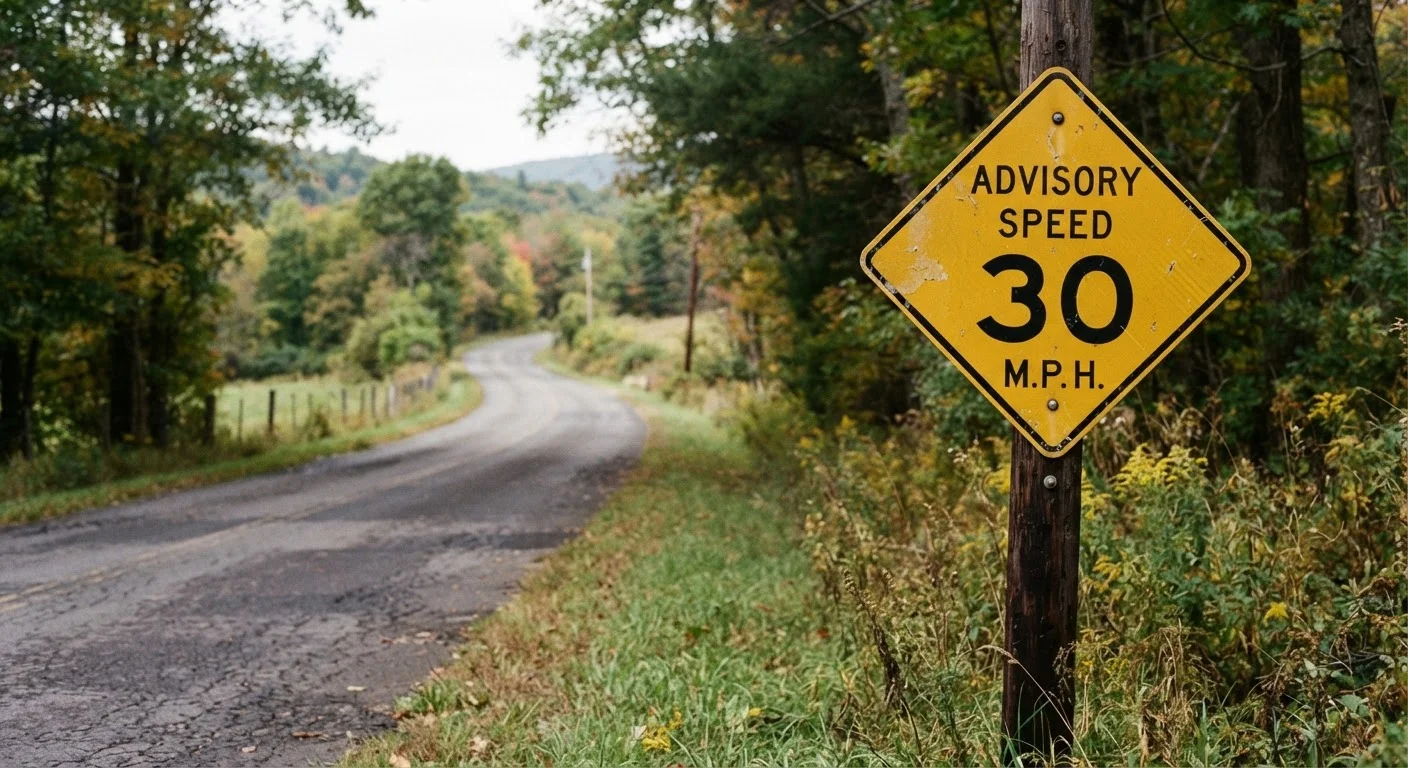
Photo: ShortwebArticles.com | Content For The Curious editorial
Key Takeaways
- Advisory speed signs (yellow diamonds) are recommendations, not legal speed limits.
- School zone speed limits apply during specific hours, not all day — check the posted sign.
- Minimum speed limits are legally enforceable, just like maximum limits.
- Driving at the posted maximum is not always legal if conditions are hazardous.
- Speed limits on highways reset at every new posted sign, not state borders.
Why Speed Sign Confusion Is a Real Safety Problem
Most drivers assume they understand speed limits — after all, they see signs every day. But traffic researchers and law enforcement consistently find that several categories of speed regulation trip up even experienced drivers. Misreading a sign doesn't just risk a ticket; it can place you, other drivers, and pedestrians in genuine danger.
The confusion isn't entirely the driver's fault. The U.S. uses multiple sign formats with different legal meanings — and many people were never taught the distinctions. This article breaks down the most common misreadings, so you know exactly what each sign is telling you. For a deeper look at how road markings also shape driver behavior, see what the lines on American roads actually mean.
Myth
Yellow diamond-shaped speed signs are the legal speed limit for that road.
Fact
Yellow advisory signs indicate a recommended safe speed for a specific condition — such as a sharp curve — not an enforceable maximum.
The yellow diamond is an advisory sign. Driving faster than the number shown isn't automatically illegal, but if you crash, that sign becomes evidence that you were warned of a hazard. White rectangular signs with black text are the actual regulatory speed limits, which are legally binding.
Myth
School zone speed limits apply all day, every school day.
Fact
School zone limits typically apply only during specific hours — usually when children are arriving or leaving — as stated on the sign itself.
Most school zone signs include a secondary panel specifying the hours of enforcement, such as 7–8 a.m. and 2:30–3:30 p.m. on school days. Some jurisdictions use flashing lights to indicate when the reduced limit is active. Driving 20 mph on a deserted road at noon may be unnecessary, but during active hours, violations carry significant fines in most states. When in doubt, slow down — the stakes are too high to guess.
Myth
There's no such thing as driving too slowly — going under the limit is always safe and legal.
Fact
Minimum speed limits exist on many highways, and driving significantly below the flow of traffic can be illegal and dangerous.
Slow vehicles in fast-moving traffic create rear-end collision risks and force dangerous passing maneuvers by other drivers. Many interstate highways post a minimum speed on the same sign as the maximum — for example, Minimum 40 / Maximum 70. Even where no minimum is posted, most states have laws against impeding traffic flow. Law enforcement can cite drivers for traveling well below posted limits without a valid reason.
Myth
You can always legally drive at the posted speed limit, regardless of conditions.
Fact
Posted limits apply under normal conditions. Driving at that speed in heavy rain, dense fog, or ice may still be considered reckless or negligent.
This is the concept of basic speed law, which most U.S. states have codified. It requires drivers to travel at a speed that is reasonable given actual conditions — even if that's well below the posted limit. Officers can and do issue citations to drivers who maintain the posted limit during hazardous weather, particularly after a collision. The posted number is a ceiling in good conditions, not a guaranteed safe speed in all conditions.
Myth
Once you cross into a new state on a highway, the speed limit automatically changes to that state's default.
Fact
Speed limits change only when a new sign is posted — there is no automatic reset at state lines.
States set their own highway speed limits, and transition zones near borders often have transitional signage. But the governing limit at any moment is the most recently posted regulatory sign you passed. Assuming a state has a uniform highway limit everywhere — and ignoring posted signs — is a ticketable offense. Always look for posted signs when entering a new road segment, regardless of which state you're in.
School Zones, Highways, and Minimum Limits
School zones and highway speed rules generate more driver confusion than almost any other area of traffic law. Part of the problem is that the rules vary somewhat by state, leading drivers to apply habits from one place incorrectly in another.
26%
of fatal crashes involving excessive speed
According to the National Highway Traffic Safety Administration, speeding is a contributing factor in roughly one-quarter of all U.S. traffic fatalities annually.
40+
U.S. states with enhanced work zone speed penalties
Most states impose doubled fines or mandatory surcharges for speeding in active construction zones, according to the American Traffic Safety Services Association.
Construction zones add another layer of complexity — reduced limits there carry enhanced penalties in most states, even when workers aren't present. If you drive through work zones regularly, construction zone driving rules covers what the posted signs and flaggers are actually communicating.
New and young drivers are statistically at higher risk of speed-related errors. Understanding where misreadings cluster most often — including at highway on-ramps and in residential zones — is covered in detail in situations where new drivers make costly errors. Similarly, unfamiliar intersection types like roundabouts have their own speed and yield rules; roundabout rules for American drivers offers a plain-language breakdown.
Don't Assume School Zones Are Inactive
This article is for general informational purposes only. Traffic laws vary by state and locality. Always consult your state's driver handbook or a legal professional for guidance specific to your situation.
The content on this site is for informational purposes only and is not a substitute for professional advice. Always consult a qualified professional for guidance specific to your situation.