
Backyard Composting, Raised Beds, and Soil Building: The Complete Approach to a Productive Garden

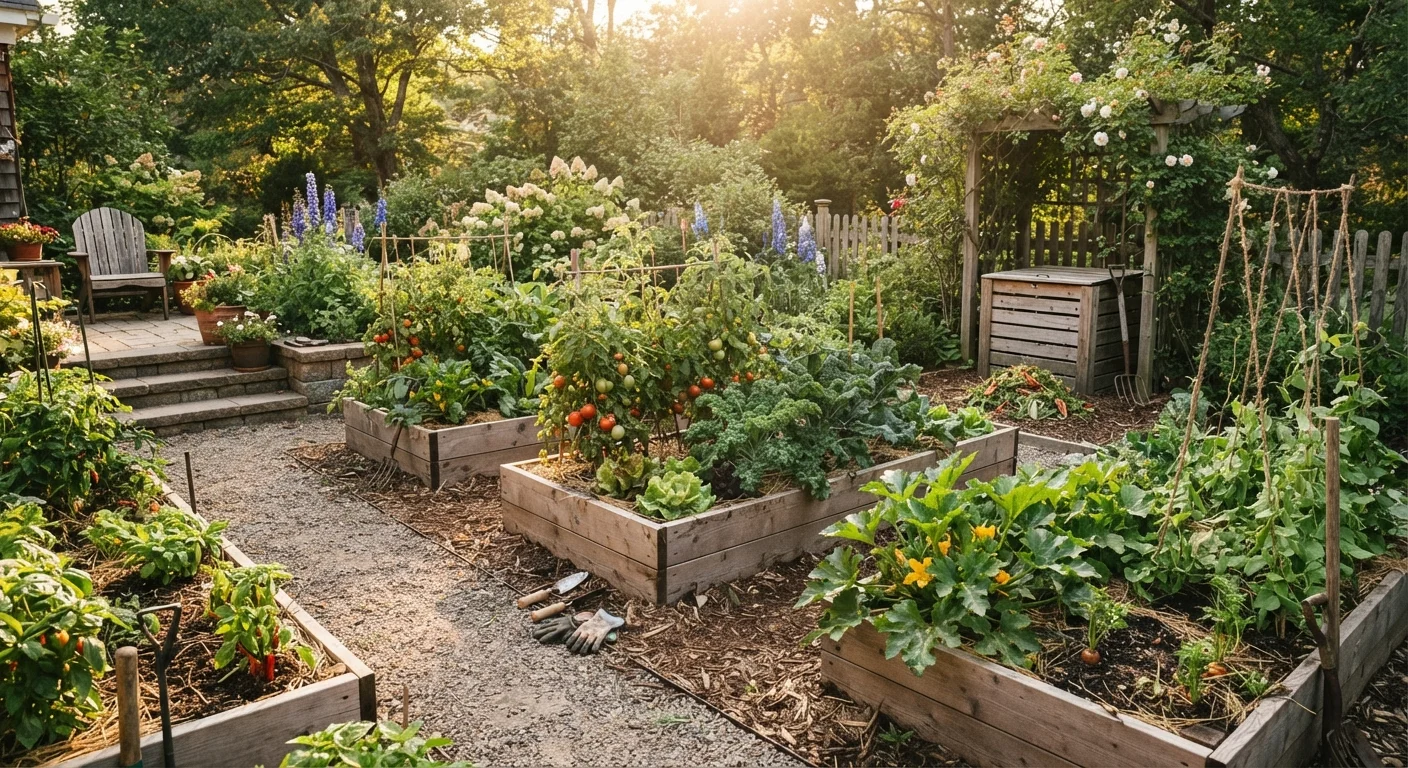
Photo: ShortwebArticles.com | Content For The Curious editorial
Key Takeaways
- Compost is the single most cost-effective soil amendment available to backyard gardeners.
- Raised beds give you complete control over soil quality, drainage, and layout from day one.
- A balanced compost pile needs roughly equal parts nitrogen-rich 'greens' and carbon-rich 'browns'.
- Replenishing organic matter each season is what keeps raised bed soil productive long-term.
- Healthy soil biology — worms, bacteria, fungi — does much of the fertility work for you.
Why Soil Health Is the Foundation of Everything
Most gardening problems — stunted plants, persistent disease, poor yields — trace back to soil. Before choosing seeds or planning a layout, understanding what's happening beneath the surface pays dividends every season. Healthy garden soil is a living system made up of mineral particles, organic matter, water, air, and billions of microorganisms that break down nutrients into forms plant roots can absorb.
The three soil textures — sand, silt, and clay — each have strengths and weaknesses. Sandy soils drain well but lose nutrients quickly. Clay soils hold nutrients and moisture but compact easily and can suffocate roots. The goal most gardeners work toward is a loamy, well-structured soil that balances drainage and retention. Organic matter is the common lever that improves all three types.
If you're starting a vegetable garden from scratch, soil assessment should be your first step — not seed shopping. A simple home test kit or a soil test through your local cooperative extension service can tell you pH, nutrient levels, and organic matter content, giving you a clear map of what needs correction.
~30%
Household waste that could be composted
The U.S. EPA estimates that food scraps and yard waste together make up roughly 30% of what Americans throw away — material that could be composted instead.
6–8 hrs
Daily sunlight most vegetables require
Most fruiting vegetables — tomatoes, peppers, squash — need six to eight hours of direct sun per day to produce well, according to university extension guidelines.
2–3 in
Annual compost topdressing for raised beds
Cooperative extension specialists commonly recommend adding two to three inches of compost per growing season to maintain organic matter levels in intensively planted beds.
Starting and Managing a Backyard Compost Pile
Compost is decomposed organic matter — kitchen scraps, yard waste, and plant debris transformed by microbes into a dark, crumbly amendment that feeds soil biology and improves structure. Starting one requires very little: a designated spot, the right mix of materials, and occasional attention.
The Green-to-Brown Ratio
Compost microbes need both nitrogen ("greens") and carbon ("browns") to thrive. Greens include fruit and vegetable scraps, coffee grounds, and fresh grass clippings. Browns include dry leaves, cardboard torn into pieces, straw, and wood chips. A rough ratio of one part greens to two or three parts browns by volume keeps the pile active without becoming slimy or smelly.
Moisture and Aeration
A healthy pile should feel about as damp as a wrung-out sponge. Too dry, and decomposition stalls. Too wet, and you'll create anaerobic conditions that produce odors. Turning the pile every one to two weeks introduces oxygen and speeds breakdown. In a well-managed pile, finished compost can be ready in as little as two to three months during warm weather, or over six months in a slower cold-pile approach.
Speed Up Your Compost Pile
Avoid adding meat, dairy, oily foods, or pet waste to a backyard compost pile — these attract pests and create odor issues without adding meaningful value.
Designing and Building Raised Beds
Raised beds offer gardeners control that in-ground planting rarely allows: you choose the soil, the drainage, and the layout. They warm up faster in spring, are easier to work without compacting, and can be positioned to make the most of available sunlight.
Size and Placement
A width of three to four feet is a practical standard — it lets you reach the center from either side without stepping in. Length is flexible, but beds of eight to twelve feet are easy to manage. Place beds where they'll receive at least six to eight hours of direct sunlight daily; most vegetables require full sun. For gardeners working with limited space, compact raised beds can make even narrow yards functional.
Materials
Untreated cedar and redwood are popular because they're naturally rot-resistant and don't leach chemicals. Pine is affordable but breaks down faster. Concrete blocks and galvanized steel are durable long-term options. Avoid wood treated with older preservatives; if using any treated lumber, verify that current formulations are rated safe for food production — local building or extension resources can clarify regional standards.
Line the bottom of new raised beds with a layer of cardboard before adding soil — it suppresses grass and weeds for the first season while decomposing into organic matter.
Keep a dedicated kitchen scrap container near your cooking area and empty it into the compost pile every two to three days — smaller, more frequent additions speed decomposition and reduce odors.
Beds raised eight to twelve inches provide enough root depth for most vegetables. Root crops like carrots and parsnips benefit from a depth of twelve inches or more.
Filling Your Beds: The Right Soil Mix
Native soil scooped from the yard is usually not the right starting material for raised beds. It tends to compact inside contained spaces, cutting off root oxygen. A purpose-built mix works better.
A widely used starting formula combines roughly one-third quality topsoil, one-third compost, and one-third a coarse material such as aged wood chips, perlite, or coarse sand. This combination provides nutrients (compost), structure and drainage (the coarse component), and enough weight and mineral content (topsoil) to anchor plants and support biology.
Use Only Fully Finished Compost in Planting Mixes
As you fill the bed, your homemade compost — if it's had enough time to fully mature — is one of the most valuable components you can add. Unfinished compost can tie up nitrogen and harm transplants; make sure it's dark, crumbly, and no longer smells like raw organic matter before mixing it into a planting bed.
For mulching the surface of beds, understanding which mulch materials suit food gardens helps you protect soil moisture without introducing unwanted weed seeds or chemicals.
Ongoing Soil Building Through the Seasons
Raised bed soil doesn't stay productive on its own — plants extract nutrients each season, and organic matter breaks down continuously. The goal of ongoing soil building is to replace what's removed and keep the biological community thriving.
Seasonal Topdressing
Each spring, add one to two inches of finished compost across the surface and work it lightly into the top few inches. This replenishes organic matter and feeds soil microbes as temperatures rise and planting begins. In fall, adding another layer on top of cleared beds acts as insulation and continues feeding biology through cooler months.
Cover Cropping
Planting a cover crop — legumes like clover or vetch, or grains like winter rye — in empty beds during the off-season protects against erosion, suppresses weeds, and adds organic matter when turned in. Legumes also fix atmospheric nitrogen, reducing how much fertility you'll need to add the following spring.
Avoiding Compaction
Never walk on raised bed soil. Compaction collapses the pore spaces that roots, water, and air move through. Working soil only when it's moist — not wet — also prevents structure damage. These habits protect years of soil-building investment. Gardeners dealing with soil-borne pest or disease issues may find our guide to pest and disease identification a useful companion resource.
“Healthy soil is not a starting point you reach and then maintain — it's a direction you keep moving in. Every season of good practice compounds on the last.”
— Home Editorial Team, Home & Garden Editorial Staff
Putting It All Together
The most productive backyard gardens are systems, not collections of individual tasks. A compost pile feeds your beds. Your beds feed your family. Garden waste returns to the compost pile. Each element reinforces the others, and the soil improves year after year with relatively modest inputs of time and attention.
Start with what you have: even a single four-by-eight-foot raised bed and a simple compost bin made from pallets can produce meaningful harvests and noticeably richer soil within one growing season. Scale from there as your confidence and space allow.
The investment in building healthy soil now pays forward for years — in stronger plants, fewer pest problems, and a garden that becomes easier to manage, not harder, over time.
USDA Natural Resources Conservation Service – Soils
The NRCS provides accessible educational materials on soil health, soil biology, and conservation practices suitable for home gardeners and small-scale growers.
Cooperative Extension Service (Land-Grant University Network)
Every U.S. state has a cooperative extension service with region-specific composting, soil testing, and raised bed gardening resources tailored to local climate and soil conditions.
EPA Composting at Home
The U.S. Environmental Protection Agency's composting guidance covers materials, methods, and troubleshooting for backyard composting in plain, accessible language.
This article is for general informational and educational purposes. Specific results in your garden will vary based on your local climate, soil type, and conditions. For guidance tailored to your region, consider contacting your local cooperative extension service.
The content on this site is for informational purposes only and is not a substitute for professional advice. Always consult a qualified professional for guidance specific to your situation.