
Mulching Fundamentals: Materials, Depths, and When Each Type Makes Sense

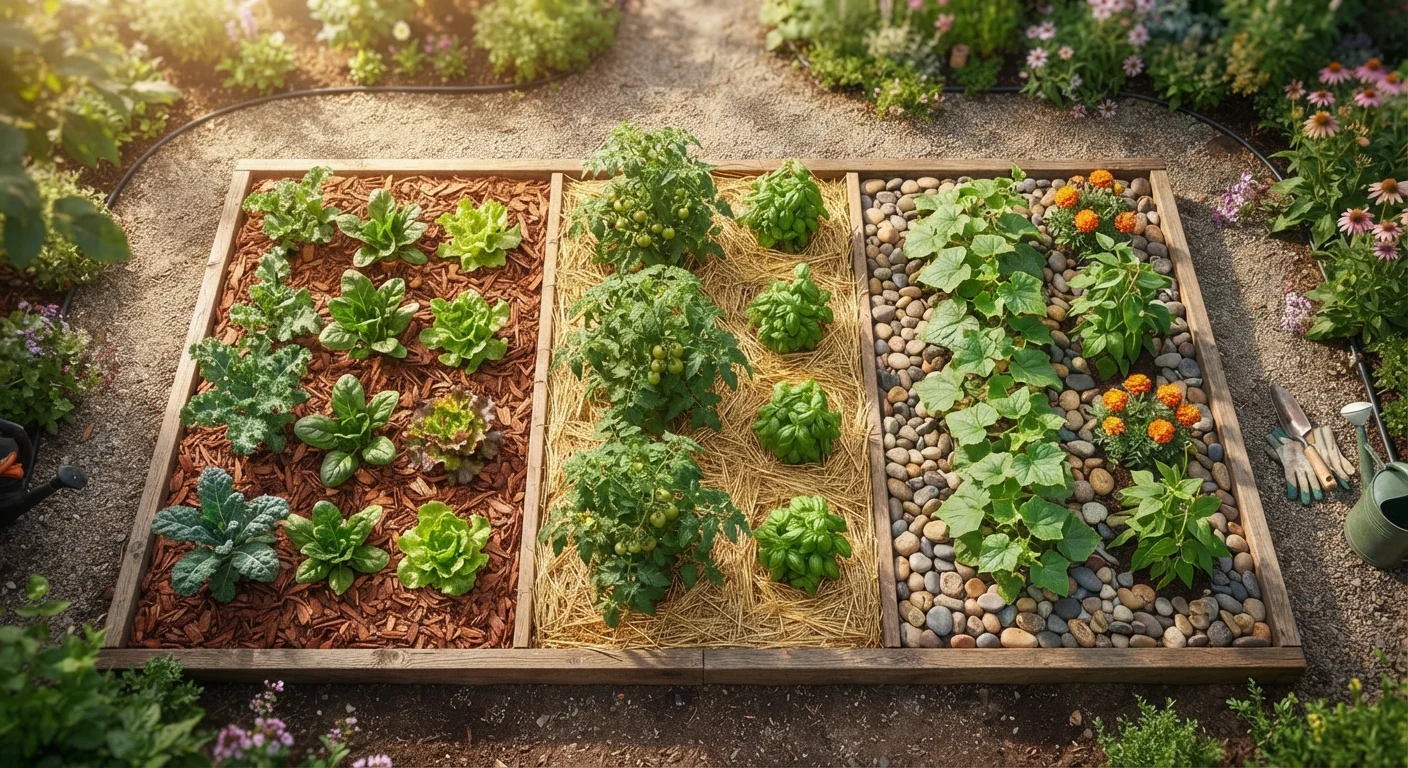
Photo: ShortwebArticles.com | Content For The Curious editorial
Key Takeaways
- Mulch depth matters as much as material — too little won't suppress weeds, too much can suffocate roots.
- Organic mulches improve soil over time; inorganic mulches offer durability but no nutritional benefit.
- Vegetable gardens, flower beds, and pathways each have different mulch requirements.
- Volcano mulching — piling material against tree trunks — is a common and damaging mistake to avoid.
- Fresh wood chips from arborists can be a low-cost or free source for large areas.
Why Mulch Does More Than You Might Think
Mulch is one of the most effective tools a home gardener has — not because it looks polished, but because of what happens underneath it. A proper mulch layer moderates soil temperature, slows moisture evaporation, suppresses weed germination, and reduces erosion from rain and irrigation. In garden beds, it can mean the difference between watering every other day and watering twice a week.
Organic mulches go further: as they decompose, they feed soil organisms and gradually improve soil structure. If you're already working on building healthy soil through composting, adding organic mulch above ground is the natural companion practice — both contribute to a living, productive soil ecosystem.
The catch is that mulch choices and application mistakes are common. Piling the wrong material too deep — or in the wrong place — can cause root rot, attract pests, and create conditions that hurt rather than help your plants.
Organic Mulches: Materials That Improve Over Time
Organic mulches break down and feed the soil. They need periodic replenishment, typically once a year, but the tradeoff is real soil improvement over time.
Wood Chips and Shredded Bark
Coarse wood chips are well-suited to shrub borders, tree rings, and ornamental beds. They decompose slowly, stay in place well, and create habitat for beneficial soil fungi. A depth of 3–4 inches works for established plants. One widely misunderstood point: wood chips do not rob nitrogen from the soil when applied as a surface mulch — nitrogen competition only occurs when chips are tilled in. Leave them on top and they're safe around most plants.
Shredded bark breaks down faster than chips and has a more uniform appearance. It's a common choice for visible front-yard beds where tidiness matters.
Straw
Straw — not hay, which carries weed seeds — is ideal for vegetable gardens. It's light, easy to pull back for planting, allows good water penetration, and breaks down over a single growing season, returning organic matter to the soil. Apply 2–3 inches. It can mat if wet, so fluff it occasionally to maintain airflow.
Shredded Leaves
Fallen leaves are a free, locally available resource. Shredded with a mower or leaf shredder, they make an excellent mulch for garden beds and around trees. Whole leaves can mat and repel water, so shredding is important. A 2–3 inch layer works well. Leaf mulch pairs naturally with the approach outlined in building a complete soil-building system.
Free Wood Chips From Local Arborists
Inorganic Mulches: Durable but Limited
Inorganic mulches don't break down, which means no reapplication — but also no soil benefit. They suit specific situations well.
| Wood Chips | Straw | Shredded Leaves | Gravel/Stone | Rubber Mulch | |
|---|---|---|---|---|---|
| Improves soil over time | Yes | Yes | Yes | No | No |
| Weed suppression | Strong | Moderate | Moderate | Moderate | Strong |
| Best application depth | 3–4 inches | 2–3 inches | 2–3 inches | 2–3 inches | 2–3 inches |
| Reapplication needed | Annually | Each season | Annually | Rarely | Rarely |
| Best suited for | Trees, shrubs, beds | Vegetable gardens | Mixed beds, trees | Pathways, arid landscapes | Play areas only |
| Relative cost | Low to free | Low | Free | Moderate to high | High |
Gravel and Decomposed Granite
Stone mulches work well in arid-climate landscapes, around cacti and succulents, or along permanent pathways. They absorb and radiate heat, which can stress plants in hot climates — a factor worth weighing before installing them widely. A 2–3 inch depth is typical. Avoid placing them over landscape fabric long-term; soil eventually migrates through the fabric and creates a weeding nightmare.
Rubber Mulch
Made from recycled tires, rubber mulch is durable and commonly used under play equipment for cushioning. It doesn't decompose, doesn't attract termites, and stays put. However, it offers no soil benefit, can heat up significantly in direct sun, and is difficult to remove once installed. Some studies have raised questions about chemical leaching over time, though research is ongoing. It's a specialty product, not a general-garden solution.
Depth, Placement, and Common Mistakes
Most mulch application problems come down to two errors: piling too deep or placing material directly against plant stems and trunks.
- 2–4 inches is the right depth for most organic mulches. Shallower than 2 inches and weed suppression suffers. Deeper than 4 inches and water may not penetrate, and roots can suffocate.
- Keep mulch 2–3 inches away from plant stems and tree trunks. Piling mulch against bark — sometimes called volcano mulching — traps moisture, promotes rot, and can invite insects and disease. Pull mulch back to leave a clear ring around the base.
- Refresh annually for organic mulches. Check depth in spring; add material if it has compacted below 2 inches.
For raised beds and in-ground planting, mulch selection should reflect how often you'll be working the soil. A light straw layer is easy to move aside; gravel is not. See the comparison of raised bed and in-ground setups for more context on how bed structure affects your overall garden management.
Avoid Volcano Mulching Around Trees
Timing and Seasonal Considerations
When you apply mulch matters. In spring, wait until the soil has warmed before mulching vegetable beds — applying too early can keep cold, wet soil from warming up and delay planting. In fall, a fresh layer of organic mulch over perennial beds helps insulate roots from freeze-thaw cycles.
Summer mulching is primarily about moisture retention. If your region experiences dry summers, a well-maintained mulch layer can measurably reduce how often you need to water — a practical benefit for both your time and water bill.
For lawns, mulch isn't typically used, but keeping nearby beds well-mulched reduces the spread of weeds into lawn edges. For a broader picture of seasonal yard care, the year-round lawn care calendar covers when to focus on different tasks throughout the year.
The content on this site is for informational purposes only and is not a substitute for professional advice. Always consult a qualified professional for guidance specific to your situation.